

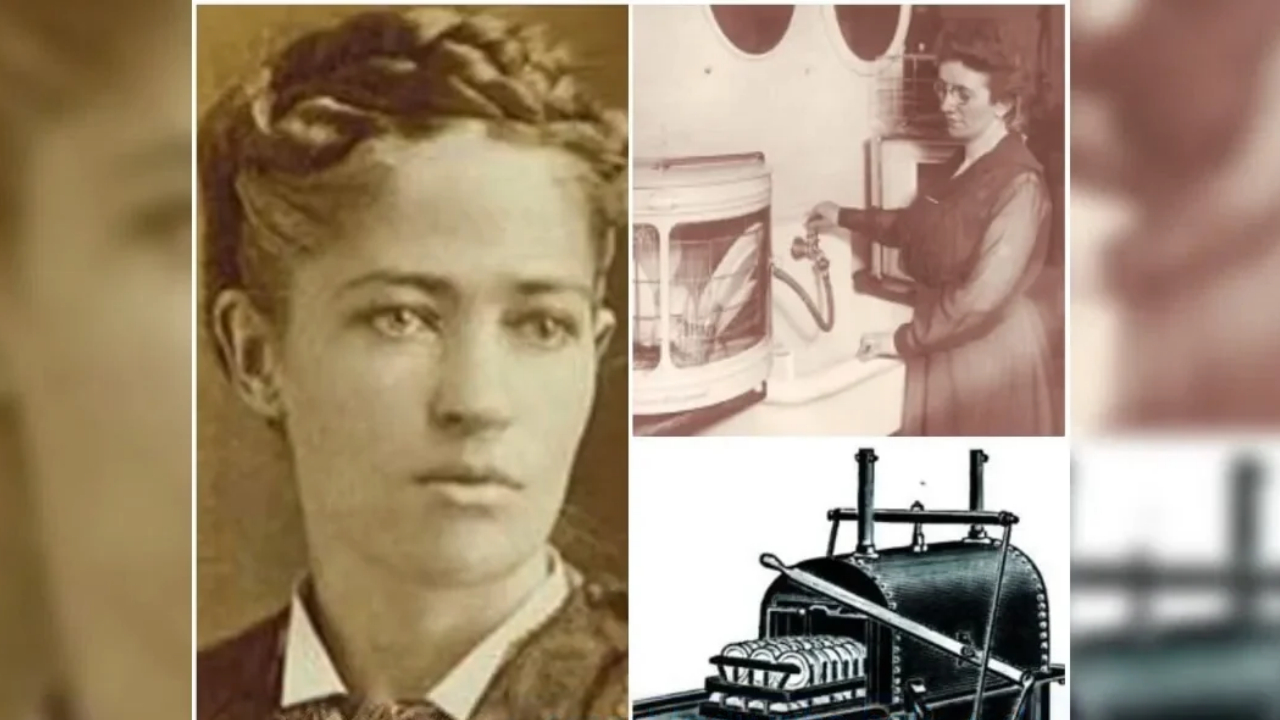
Every Thanksgiving, the good plates come down from the top cabinet in our kitchen, and every year I wash them by hand while everyone else watches football. My husband once asked why I do not just put them in the dishwasher. I gave him the look I suspect Josephine Cochrane gave her kitchen staff.
In 1886, Cochrane patented a dish-washing machine, and she later told reporters that her servants kept chipping her china. Part of that story holds up. Part of it, according to census records and her own letters, was good marketing.
I went through the patent, the census findings and several histories to sort one from the other.
The Famous Version of the Story
The version that circulates on Facebook and in trivia lists goes like this. A wealthy Illinois socialite hosts dinner parties, her servants chip her heirloom china in the sink, and she declares that if nobody else will invent a dish-washing machine, she will do it herself.
Most of that came from Cochrane herself, in an interview she gave late in life. Retold for more than a century, the anecdote now appears on museum pages and in kitchen-gadget videos almost word for word.
I have a weakness for household legends like this one, which is how I ended up digging into how spring cleaning became an American ritual a few weeks ago.
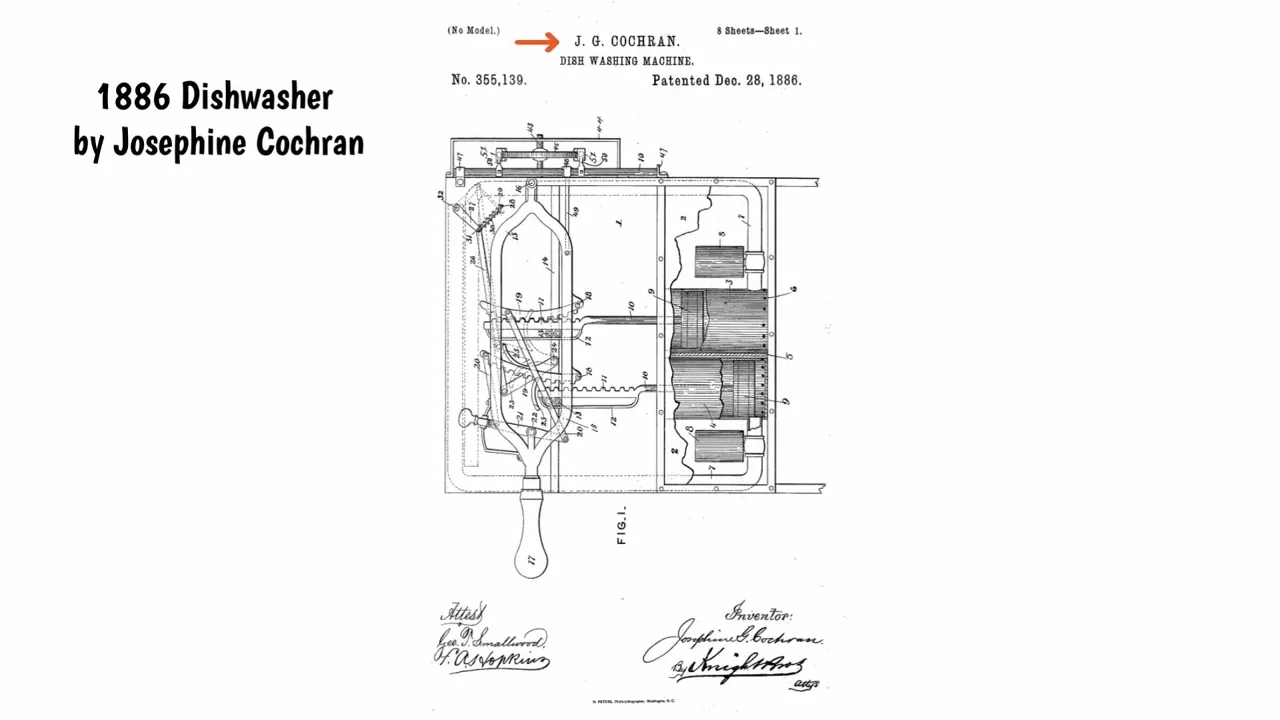
U.S. Patent No. 355,139, titled “Dish-washing machine,” was issued on December 28, 1886, to Josephine G. Cochran of Shelbyville, Illinois. You can read the original patent text and drawings online, rack diagrams included.
What the Census Records Actually Show
The servant detail is where the story starts to wobble. Historian Irene M. H. Herold wrote her master’s thesis on Cochrane, and History.com summarized her findings from household records and family papers.
- The servant explanation comes from a 1912 Chicago Record-Herald interview, a year before her death.
- The 1870 census lists no servants at the Cochran home.
- The 1880 census lists one servant and one boarder.
- The same interview called her late husband a former judge, though he was a circuit court clerk.
- Her private letters show she knew she did not descend from John Fitch, the steamboat inventor, even though she let the press believe it.
That last point reassures me. She was a widow selling a strange new machine to skeptical hotel managers, and a famous ancestor made better copy than the truth. The chipped china may be real. A household full of clumsy maids probably was not.
She Did Not Build the First Dishwasher
Calling Cochrane the inventor of the dishwasher is not quite accurate either. IEEE Spectrum notes that Joel Houghton received the first U.S. dishwasher patent in 1850, decades before her machine existed.
In 1850, Joel Houghton patented a wooden machine with a hand-turned wheel that splashed water on dishes, it was hardly a workable machine, but it was the first patent for a dishwasher!
#InventorsDay https://t.co/h7kBeAQXsK
— Mr. Appliance (@MrAppliance) February 11, 2022
| Year | Inventor | How the machine cleaned |
| 1850 | Joel Houghton | Hand-cranked wooden box with scrubbers |
| 1860s | L.A. Alexander | Hand-cranked, geared mechanism improving on Houghton |
| 1886 | Josephine Cochran | Pumped jets of soapy and hot water over dishes held in wire racks |
The last column carries the whole story. Earlier machines scrubbed the dishes, which is exactly how china gets chipped.
Cochrane held each plate still and moved the water instead, the same principle behind the machine in your kitchen. So she did not invent the dishwasher. She built the first commercially successful one around that idea.
How Her Machine Worked
View this post on Instagram
Cochrane had no engineering training. She designed the first model in a shed behind her house in Shelbyville and hired a mechanic, George Butters, to help build it. According to the Lemelson-MIT profile of Cochrane, she measured her own plates, cups and saucers so wire compartments could be made to fit each one.
The patent describes a cylindrical wire crate that turns inside a box while two force pumps take turns. One pump sprays soapsuds, the other sprays clear hot water, and a movable bottom sends each liquid back to its own tank. There is a separate rack with spring clamps for knives and forks.
As someone who rearranges our dishwasher racks more often than I admit, I love that her first step was measuring the dishes. Fit the rack to the plate, not the plate to the rack. It is still the best loading advice I know.
Selling It Was Harder Than Building It
The urgency came from money, not maids. Her husband William died in 1883, and Julie M. Fenster’s 1999 history in Invention & Technology reports that his estate paid creditors 55 cents on the dollar. The machine had to sell.
Hotels bought first. Around 1887, a friend introduced her to the manager of Chicago’s Palmer House, who placed an order. At the Sherman House she went in alone and came out with an order she later recalled as worth $800. Crossing that lobby alone, she said years afterward, was the hardest thing she ever did in business.
Did you know? At the 1893 World’s Columbian Exposition in Chicago, nine of her machines washed dishes in the fair’s restaurants. Judges gave the design their top award for mechanical construction, durability and fitness for its purpose.
Why Home Kitchens Had to Wait Until the 1950s
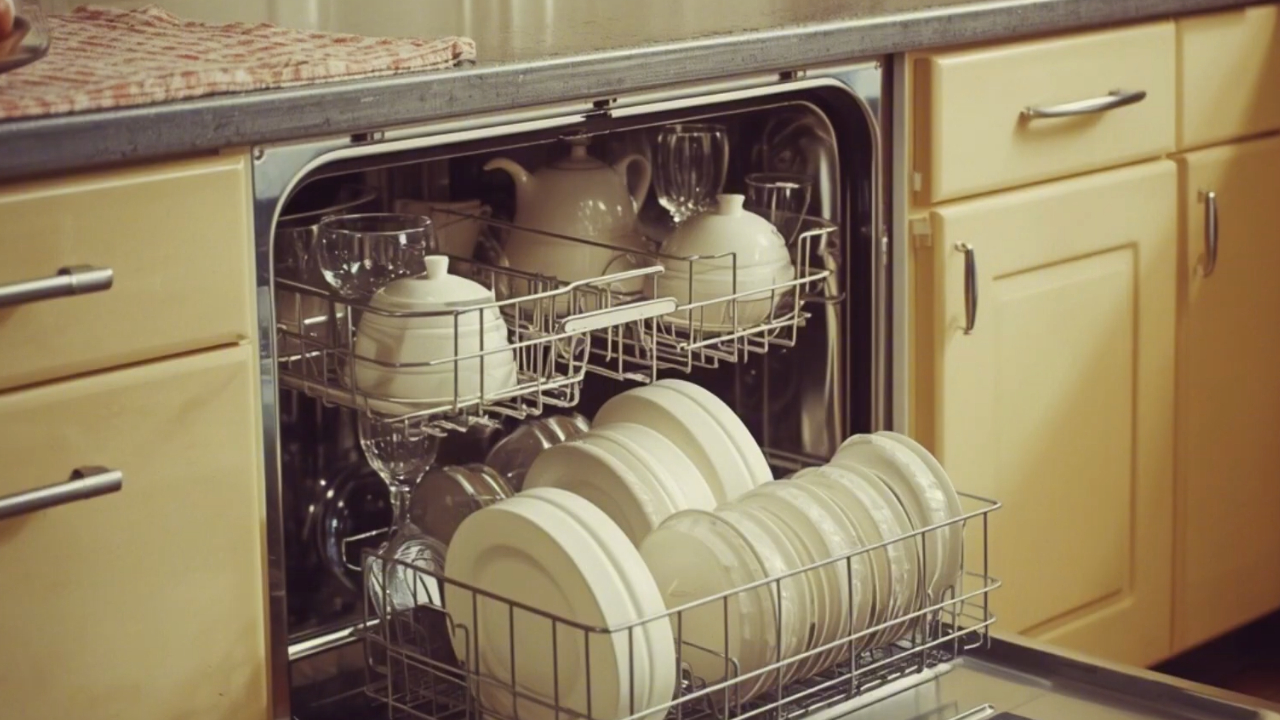
Cochrane built a home model, but families did not buy it. History Facts puts the 1893 home model at $250, while Fenster gives about $350 for the domestic version. Either way, it was serious money for a household in the 1890s, and price was only one obstacle.
- Many homes lacked a water heater big enough to supply the scalding water the machine needed.
- Early users complained about soapy residue left on the dishes.
- Hotels could justify the cost by cutting kitchen staff, while families had no payroll to save.
Fenster reports that hotels said their machines paid for themselves within months, trimming dish crews by up to 75 percent. Home dishwashers took off only during the postwar boom of the 1950s, once big water heaters and reliable electricity were standard in more American houses.
What Happened to Her Company
Cochrane opened her own factory in 1898 in a former schoolhouse near Chicago, with Butters as foreman. When she died in Chicago in August 1913, she held six U.S. patents and two British ones.
Her business outlived her through a chain of owners. Fenster writes that Hobart absorbed it in 1926, and the National Inventors Hall of Fame dates the first KitchenAid home dishwasher based on her design to 1949. Whirlpool bought KitchenAid in the 1980s.
Reading the sources side by side, I noticed they disagree on several smaller details, and it helps to know where. Her birth year appears as 1839 in an obituary and 1841 on her death certificate. Her surname shows up as both Cochran and Cochrane. Some profiles still repeat the John Fitch connection as fact. The home model price ranges from $250 to $350, depending on who is telling it.
What I Do With the Good Plates Now
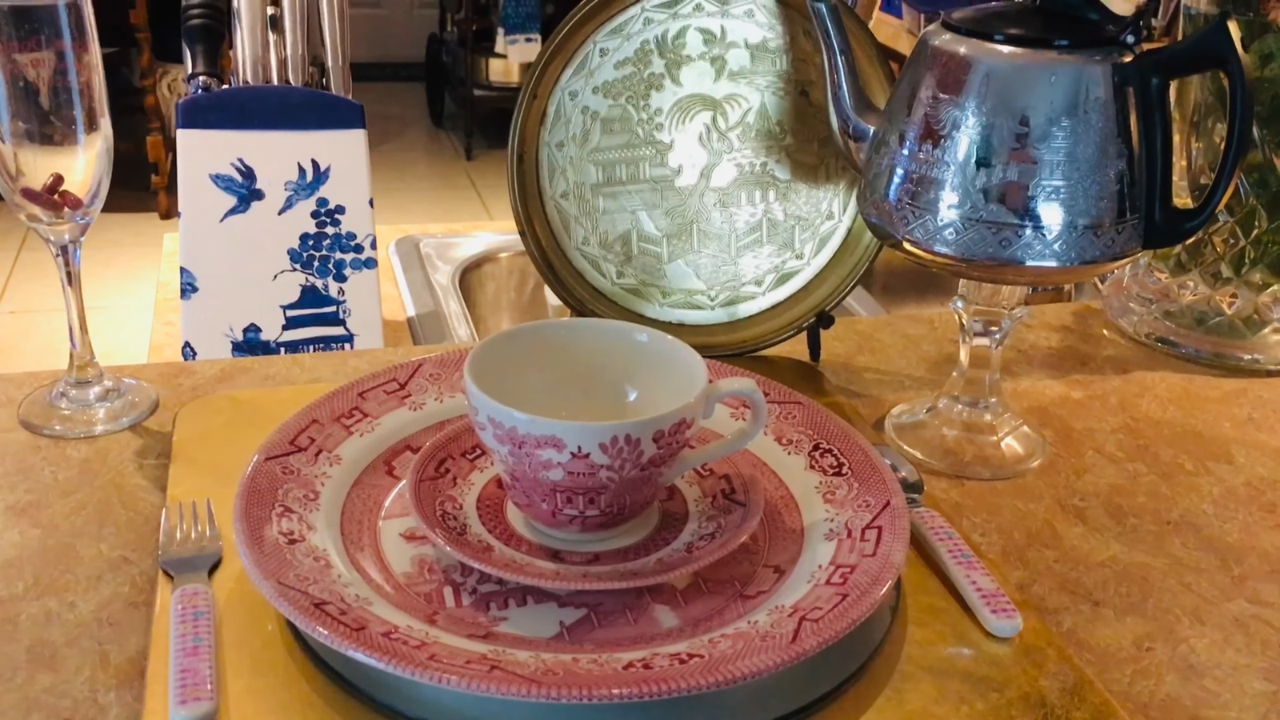
Her story changed how I think about the Thanksgiving plates. Cochrane built racks that held each piece apart because chips happen when dishes knock together, and that rule still applies in a modern machine.
Dealers who specialize in replacing discontinued china recommend hand washing anything old, skipping lemon-scented detergents because the acid wears the finish, and letting pieces cool before unloading because warm trim is more fragile.
Dealers who specialize in discontinued china recommend hand washing old pieces and extra care with delicate finishes. A lemon scent on a detergent bottle tells you about its fragrance, not its acidity, so I check the ingredients and the manufacturer’s care advice instead.
Washing the old plates by hand is also the one kitchen chore I find calming, for reasons I explored in why cleaning feels so good when life gets out of control.
For everything else, the federal ENERGY STAR dishwasher guidance says a new certified model uses less than half the energy of washing by hand and saves about 8,400 gallons of water a year. It also says to scrape plates rather than rinse them, which settled a long argument at our sink.
The Plates Going Back in the Cabinet
@lifeonthepond84Chipped china helped create the modern dishwasher. Josephine Cochran developed a practical water-pressure dishwashing machine in the 1880s after her fine dishes were being damaged. Her design won attention at the 1893 Chicago World’s Fair, and the business she started eventually became part of the company behind KitchenAid dishwashers. Source + image: U.S. Patent and Trademark Office — USPTO.gov♬ Acoustic Guitar Inspiring – TonsTone
The servants were probably fewer than she claimed, and the steamboat inventor was not her ancestor. The chipped china, the measured saucers, the shed in Shelbyville and the walk across a Chicago hotel lobby all hold up. Her patent is still there for anyone to read.
Next time you unload the dishwasher, look at how the tines hold each plate upright and apart. That arrangement traces back to one irritated widow with a tape measure.
It is also why, this November, the gold-rimmed plates will go back in the sink and the stoneware will go in the machine, exactly the split Cochrane would have understood.