

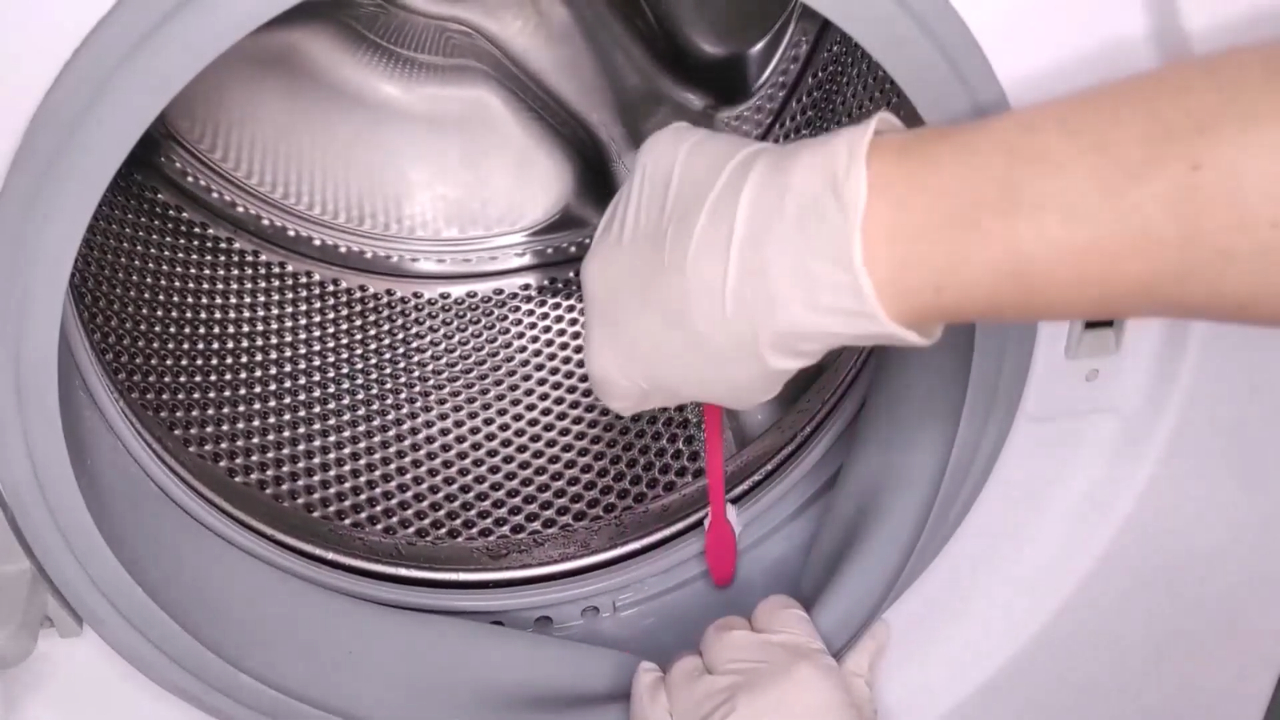
For years I believed I cleaned our washer gasket. Every Sunday I ran a cloth around the rubber ring of our old Whirlpool front-loader; it looked fine, and I moved on.
Then our youngest pulled a swim towel out of a fresh load, sniffed it, and handed it back to me without a word.
That evening I peeled the bottom fold all the way back and pointed a flashlight into it. The visible lip was clean. The crease underneath was not.
Researchers have since explained exactly why the bottom of the seal is the worst spot, and once you know where to look, the job gets much easier.
Why the Bottom Fold Is the Dirtiest Part of the Seal
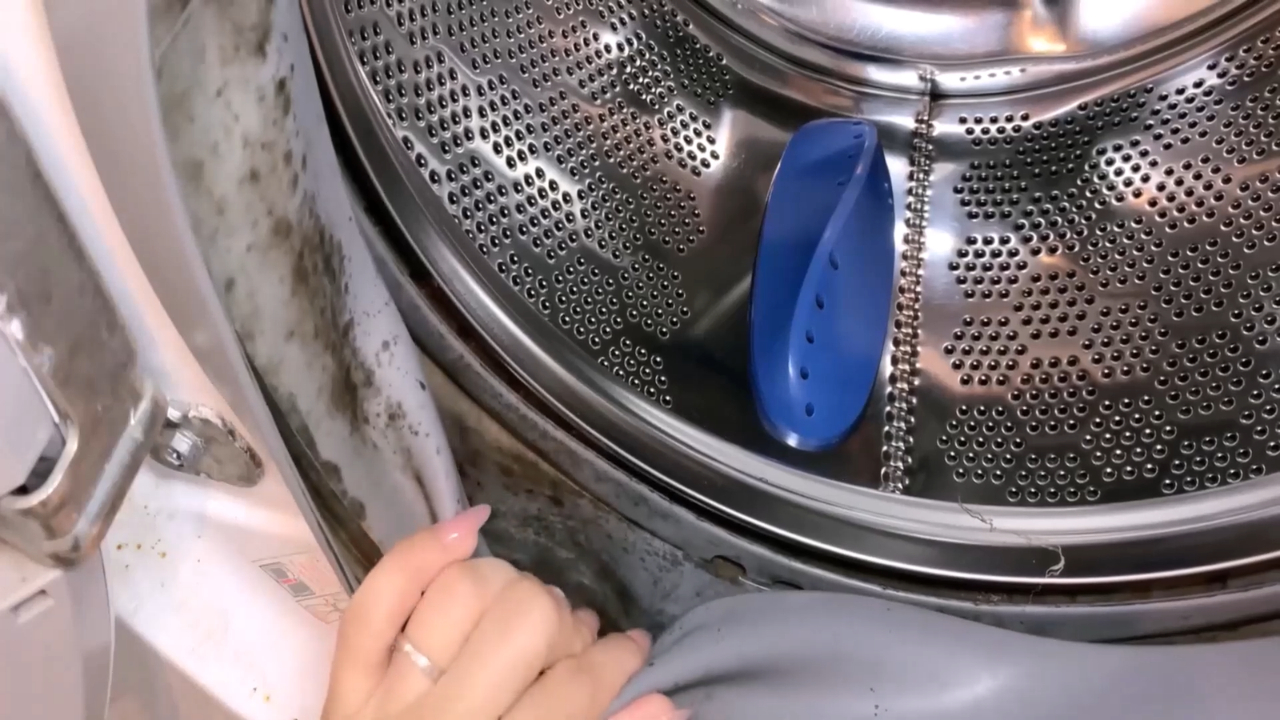
A team from Furtwangen University in Germany swabbed ten household front-loaders in 2020 and compared the top and bottom of each rubber door seal. The difference was not subtle.
| Spot sampled | Average bacteria per square centimeter | Per square inch (my conversion) |
| Top of door seal | About 111 | About 700 |
| Bottom of door seal | About 31,000 | About 200,000 |
| Detergent drawer chamber | About 42,000 | About 270,000 |
I converted the figures by multiplying by 6.45, since one square inch equals about 6.45 square centimeters. On average, the bottom of the seal held roughly 280 times more cultivable bacteria than the top, and the authors blame water, which drains off the top and sits in the lower fold.
With only ten machines and wide variation, they call for larger studies, so treat the numbers as a direction rather than a forecast for your washer.
What Is Actually Living in the Folds
View this post on Instagram
Bacteria are only part of the picture. A 2023 study in Scientific Reports sampled 50 washing machines in Shiraz, Iran, and found fungi in 41 of them. The inner side of the rubber seal, the part hidden inside the fold, produced the most.
In the Shiraz study, the inner door seal yielded 37.5% of the fungi recovered, the outer seal 36.1% and the detergent drawer 26.2%. The most common types were Aspergillus, Rhodotorula, Penicillium and Cladosporium.
A separate German study found Moraxella osloensis in 9 of the 13 rubber seals, a bacterium linked to sour laundry smells. None of this means your laundry is making you sick. The Furtwangen authors say the potential risk mainly concerns people with weakened immune systems, pregnant women, and older adults.
What You Need Before You Start
I keep a small caddy for this job on the shelf above our machine, and nothing in it is fancy.
- Rubber or nitrile gloves, which both LG and Whirlpool tell you to wear when using bleach
- Goggles that seal around your eyes
- A bucket and regular liquid chlorine bleach
- A soft toothbrush for the crease, which Whirlpool suggests for the seal’s crevices
- Two microfiber cloths, one for washing and one kept dry
- A phone flashlight
Leave the scouring pads under the sink. Whirlpool warns that harsh or abrasive cleaners can damage the seal, and a scratched gasket is harder to keep clean.
I also empty the drum completely first, because the folds tend to hide the one sock everybody swears they already put away.
Mixing the Bleach Solution Safely
LG and Whirlpool give the same recipe in their care instructions:
3/4 cup of liquid chlorine bleach in 1 gallon of warm water.
Whirlpool says to leave it on the seal for about 5 minutes. LG warns that undiluted bleach can damage the door seal, so never pour it straight onto the rubber.
The CDC mold cleanup guidance sets a ceiling of 1 cup of bleach per gallon and says never to mix bleach with ammonia or any other cleanser. Vinegar counts as another cleanser. Open a window before you start, and keep the gloves and goggles on.
Did you know? The CDC advises people with asthma, COPD, allergies or a weakened immune system to leave mold cleanup to someone else.
Running bleach through the whole machine is a different job, and I compared manufacturer doses for it in my guide to cleaning a washing machine with bleach.
Cleaning the Folds One Section at a Time
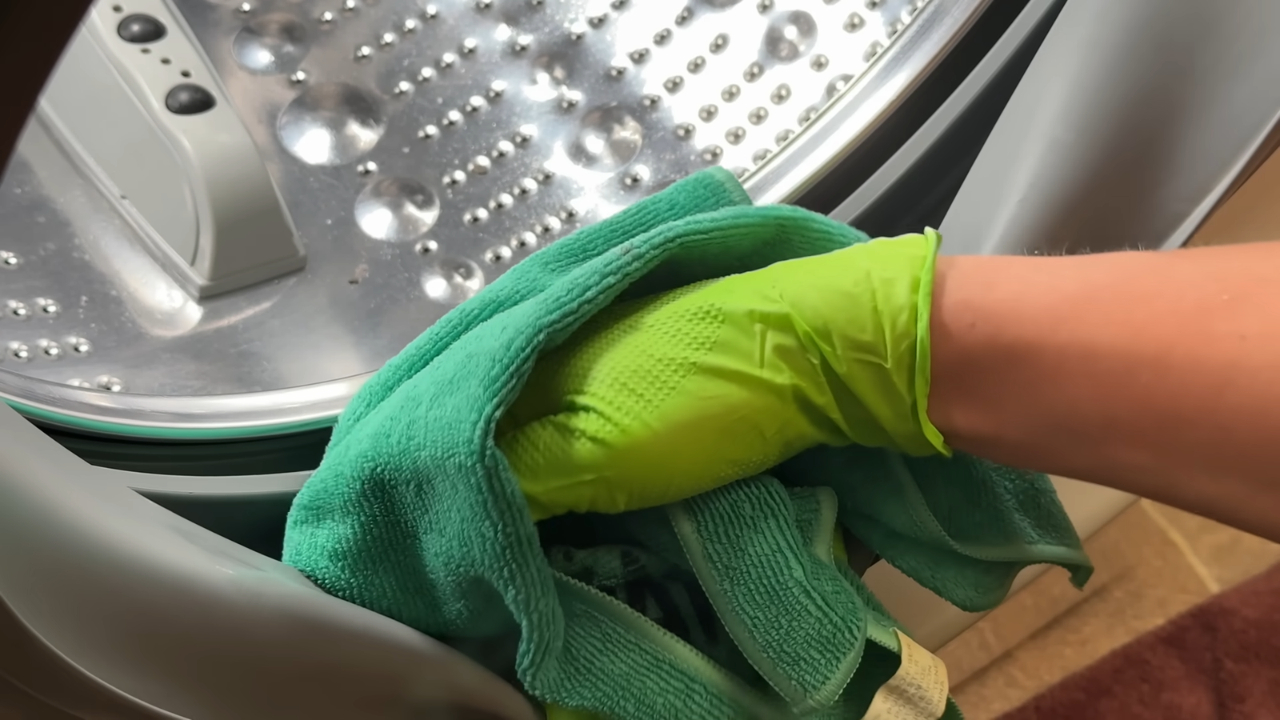
My old mistake was one quick lap around the ring. Now I treat the seal like a clock face and give the bottom, roughly from 4 o’clock to 8 o’clock, most of my attention.
- Pull the fold back at 12 o’clock and shine the flashlight in. Remove hair, lint, hair ties and anything metal.
- Wipe the solution into the fold in short sections, working down both sides toward the bottom.
- At the bottom, fold the rubber back fully and run the toothbrush along the crease. If your gasket has small drain holes in the lowest fold, clear them gently.
- Leave the solution on for 5 minutes, then wipe it off with a cloth dipped in plain warm water.
- Finish with the outer lip and the strip where the gasket meets the glass.
It sounds fussy, but it is the only way I stop skipping the stretch I cannot see.
Drying Is What Stops Mold From Coming Back
Both studies point at the same culprit. Standing water in the lower fold feeds everything else, which is why the Furtwangen team recommends leaving machines open to dry and the Shiraz authors suggest the same. LG also tells owners to wipe the door and gasket dry at the end of every wash day.
After cleaning, I run the dry cloth around the seal the same clock-face way and press it into the bottom crease until the cloth comes back dry. Then the door stays open until the rubber is completely dry, which in our laundry room usually means overnight.
If you have toddlers or pets, an open drum looks like a hiding place. Prop the door just slightly or close the laundry room door instead, and use your own judgment about what is safe in your home.
How Often to Clean the Gasket
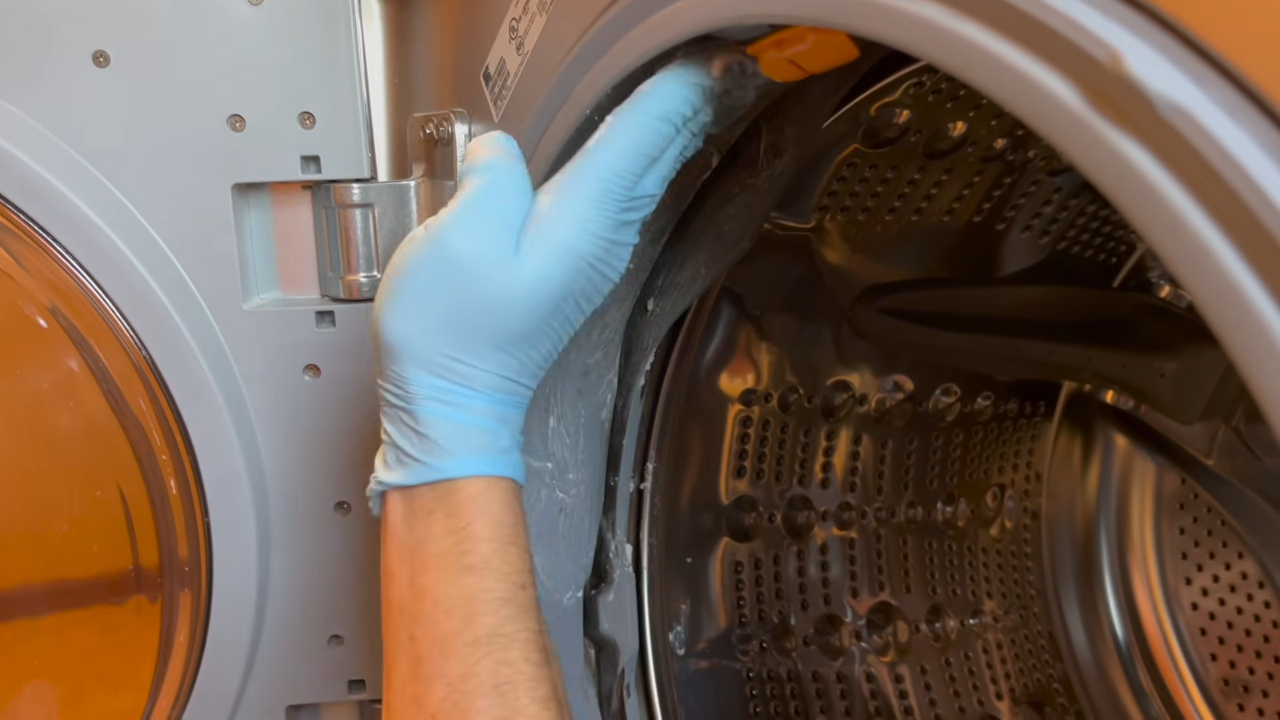
Manufacturer schedules are modest, and in my experience they are realistic for a busy family.
- After every wash day, wipe the gasket dry, as LG recommends.
- Every few loads, give it a damp wipe to lift soap scum, which Whirlpool suggests before the dry wipe.
- About once a month, or every 30 cycles, do the full bleach cleaning described above.
Clean sooner if you notice a musty smell, new dark spots or a towel that smells off straight out of the wash. Whirlpool also suggests a dehumidifier in humid laundry spaces, and if your machine lives in a damp basement, a monthly schedule may not be enough.
Using the right amount of HE detergent helps too, since excess suds leave residue in exactly the folds you just cleaned.
When Black Spots Will Not Come Out
Sometimes the fold comes out clean but dark speckles stay put. The Shiraz researchers point out that rubber is porous, letting biofilm form and resist removal.
The EPA makes a similar point about porous household materials in its guide to mold cleanup in your home, noting that mold can grow into the gaps and may not come out completely.
A faint stain that survives two careful cleanings is often just a stain. A seal that smells musty again within days, feels slimy, or shows cracks in the fold is a different story, and replacing the gasket may be the sensible fix. Look up the part using your model number and check whether the job is in your comfort zone before you start.
If you are also finding dark bits on clean clothes, my article on black flakes in the washing machine explains where they usually come from.
The Sunday Wipe, Revised
@cleanthatup How To Clean Your Front Load Washing Machine Rubber Gasket #howto #cleaning #cleantok #cleantok101 #cleanthatup #cleaningtips #cleaningtiktok #satisfying ♬ original sound – Clean That Up
I still wipe our gasket on Sundays. The difference is that the cloth now goes into the bottom fold first, from 4 o’clock to 8 o’clock, instead of skimming the visible lip and calling it done.
Once a month the bucket comes out, the window opens, and the toothbrush goes into the crease.
The swim towel passed its sniff test the following week. If you want to know whether your own gasket needs this, fold the bottom back tonight with a flashlight in your hand. The rubber will tell you more in ten seconds than any cleaning schedule can.
Good luck!