

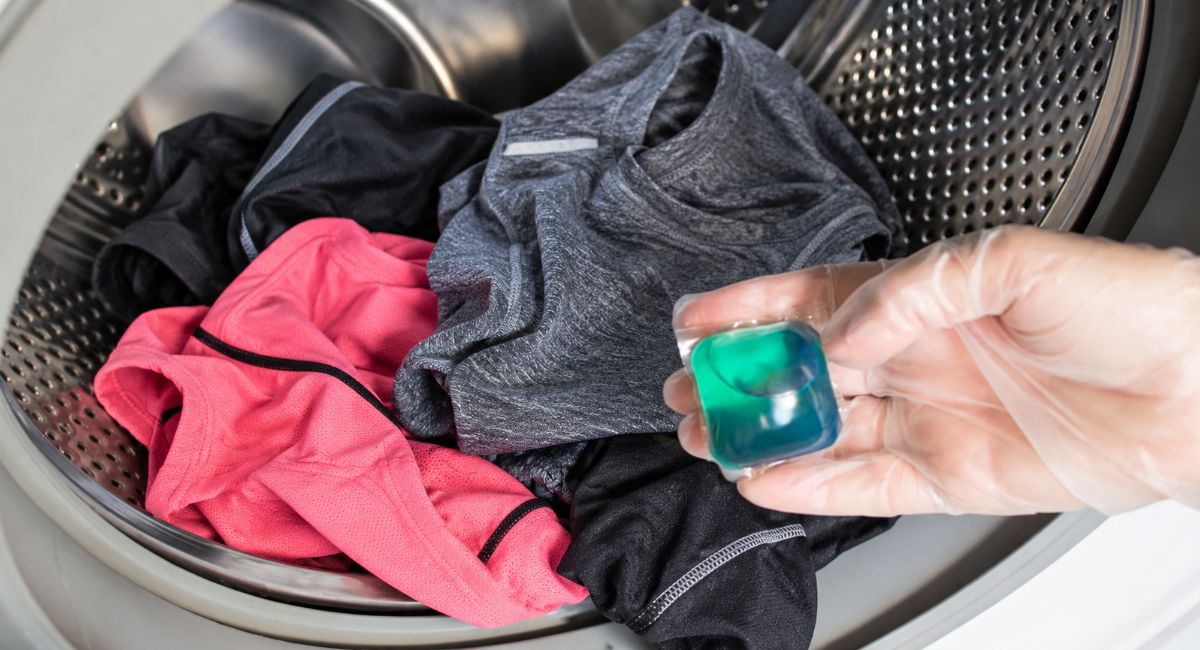
My daughter joined the high school cross-country team this fall, and by late September her practice shirt had a reputation.
It came out of our LG, dried on the laundry room rack, and landed on her pile looking clean.
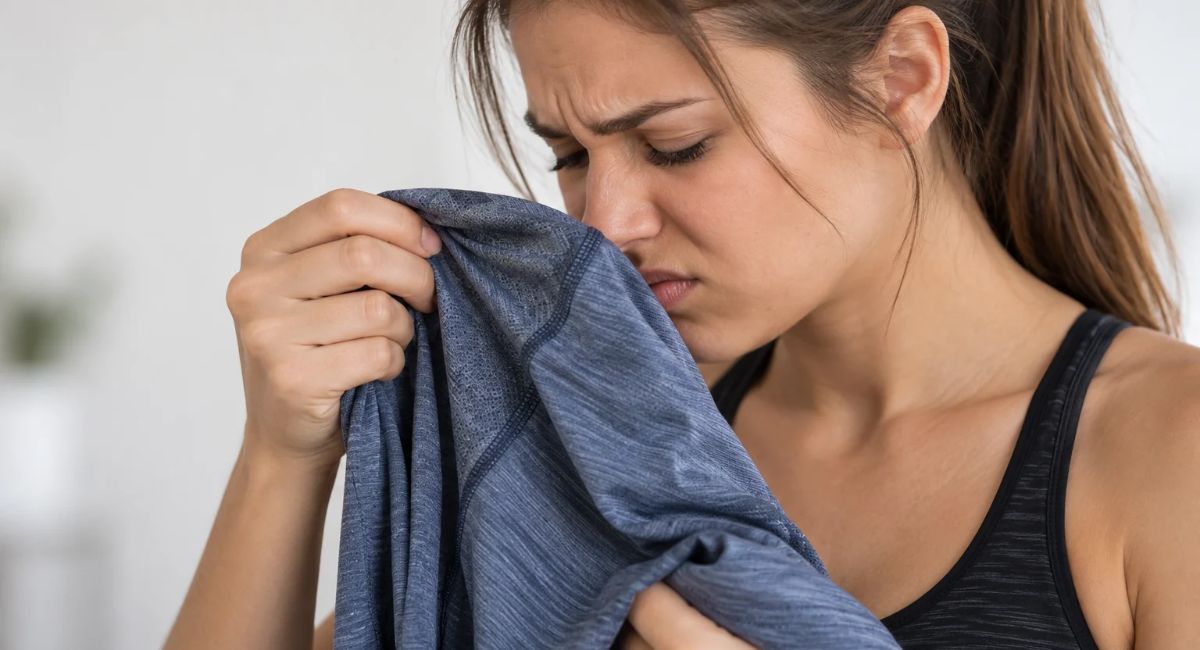
The moment she pulled it over her head, it smelled like the end of a long run. She held it out at arm’s length and asked whether I had washed it.
I had. Clean laundry can pick up bacteria inside the washer, and polyester workout shirts are where you notice it first.
Most of the fix comes down to the machine, the detergent dose and how fast the shirt dries.
Why Workout Shirts Smell Before Everything Else
Sweat on its own barely smells. The odor comes from bacteria feeding on it, and synthetic fabric gives them a comfortable place to stay.
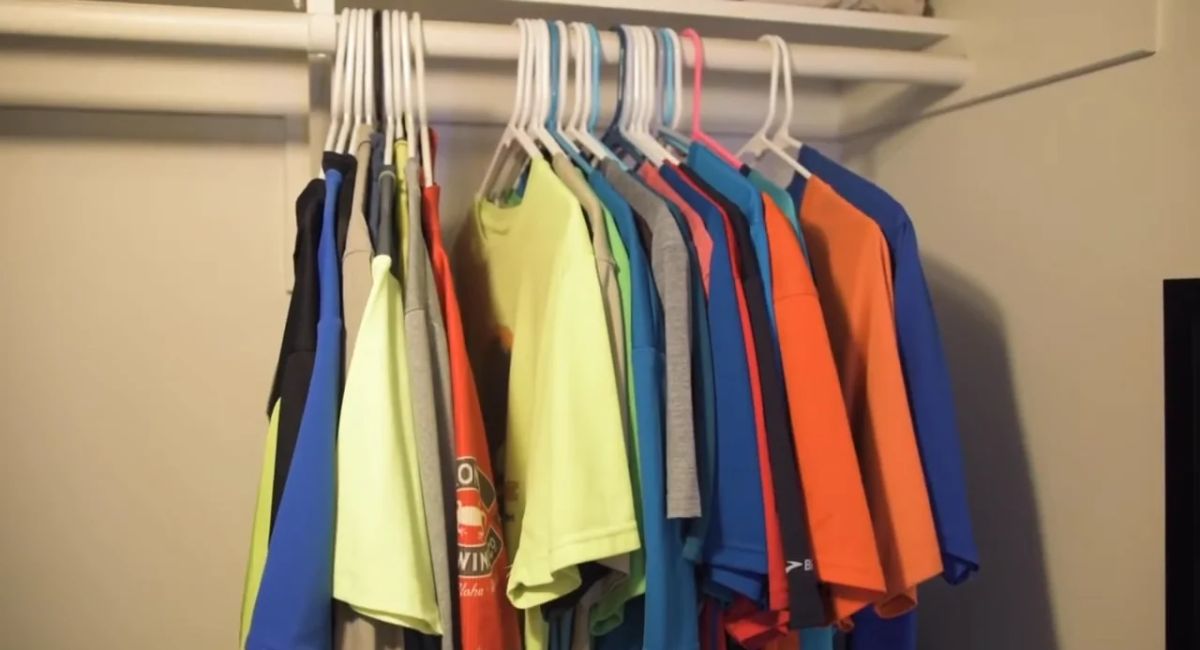
A workout shirt gives those bacteria several advantages at once.
- Body oil clings to polyester and survives a cold, gentle cycle.
- Extra detergent and fabric softener leave a film that holds residue in the fibers.
- Damp hours in a gym bag or a closed washer let bacteria multiply before and after the wash.
- Body heat during the next workout warms the fabric and releases whatever stayed behind.
So the machine is rarely the only culprit. It is where a shirt that is already struggling picks up extra company.
Can the Washer Really Put Bacteria Back on Clean Clothes?
Yes, and I did not want to believe it either. I came across a small 2025 study from U.S. researchers who ran brand-new, germ-free washcloths through ordinary home washers. Even the washcloths that went in by themselves, with detergent and cold water, came out with bacteria and mold on them.
Nothing else was in those loads, so the germs came from the machine and the water running through it. The study used washcloths, not gym shirts, but the lesson was easy to apply. A quick cold wash gets the dirt out. It does not clear out everything living in the drum.
Did you know? In 2019, a German hospital traced an antibiotic-resistant germ found on newborn babies to an ordinary washing machine in its basement. The bacteria lived in the soap drawer and the rubber door seal. Once the machine was gone, the problem stopped.
The Week a Clean Shirt Failed the Sniff Test
My first move was the wrong one. I rewashed the shirt with a heavier scoop of detergent, hoping more soap meant more clean. I
t came out smelling of detergent on top and practice underneath, which is somehow worse.
Then I checked what I had skipped. The shirt had gone in with towels on a Tuesday night, and the load sat wet in the drum until morning because I fell asleep on the couch.
Behind the door seal, the bottom fold had a gray film I would normally wipe on Sunday. I had missed a Sunday. The film is the same residue I describe in my article on why a washing machine smells like a swamp.
I do my best thinking while folding laundry, and that afternoon the pattern was obvious. The shirt was not dirty. It had stayed wet too long, in an overdue machine, with too much soap.
Where the Bacteria on a Clean Shirt Come From
Once I sorted the research by where the bacteria start, each fix had an obvious place in the routine.
| Source | What the research shows | What helps |
|---|---|---|
| Your own skin | Polyester holds skin bacteria after exercise (Ghent, 2014) | Wash inside out, skip softener |
| Other laundry | Worn household laundry changed which bacteria landed on test washcloths (Frontiers, 2025) | Wash workout gear in its own load |
| Seal and drawer | Hospital bacteria lived in both (Bonn, 2019) | Wipe the seal, rinse the drawer |
| Wet time | Damp fabric gives surviving bacteria hours to grow | Unload within an hour |
How I Wash Workout Shirts Now
Our routine had to survive a teenager after practice.
- Hang the sweaty shirt to dry before it goes in the hamper.
- Turn it inside out and wash it with other synthetics, not towels.
- Wash at the temperature on the care label, with measured detergent and no fabric softener.
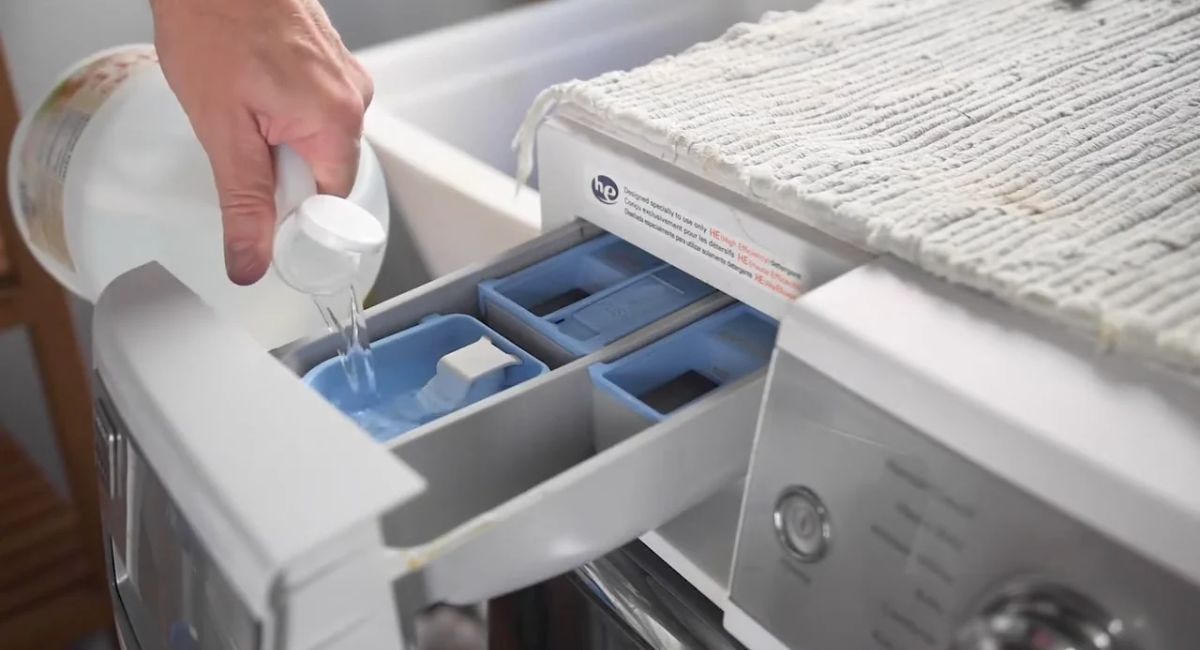
- For a shirt that still smells, soak it 30 minutes in 1 cup of white vinegar and 4 cups of cold water, then wash as usual. Never add bleach to that soak.
- If you use a laundry sanitizer, pick one labeled for synthetics and add it as the only product in that cycle.
- Move the load out of the drum within an hour and leave the door and drawer open.
The machine side runs on the schedule from my piece on how often a washing machine really needs cleaning. Your own washer manual wins if it says something different.
Proper washing habits help keep workout clothes fresh without relying on extra detergent or fabric softener.
Hot Water and the Dryer Are Not a Free Pass
Hot water sounds like the easy answer, but check the tag first. Most workout shirts say cold or warm, because heat ruins the stretchy fibers that make them fit. A stretched-out shirt is no win, even if it smells fine.
The dryer is a different story. I read the CDC tips for athletes, and one line stuck with me.
The CDC advice for athletes says to wash uniforms, towels and workout clothes after every use and dry them fully in a dryer, not on a clothesline, as long as the care label allows it.
Their advice is about stopping MRSA, a stubborn staph skin infection, from spreading around a team. So in our house, everyday shirts follow the tag. When the coach warns that a skin infection is going around, the shirts go in the dryer on the lowest heat the tag allows, until they are completely dry.
What Changed in Our Laundry Room
The cross-country shirt survived. It now goes from my daughter’s bag straight onto a hook on the pegboard in our laundry room, the one I painted the same color as the wall so nobody notices it. The shirt dries there until wash day, goes in inside out with the other synthetics, and comes out of the drum within the hour.
I still wipe the seal every Sunday evening, and I no longer skip one. Last week she pulled the shirt over her head before a meet and did not hold it out at arm’s length. She did not say anything either. In our house, that counts as a review.