

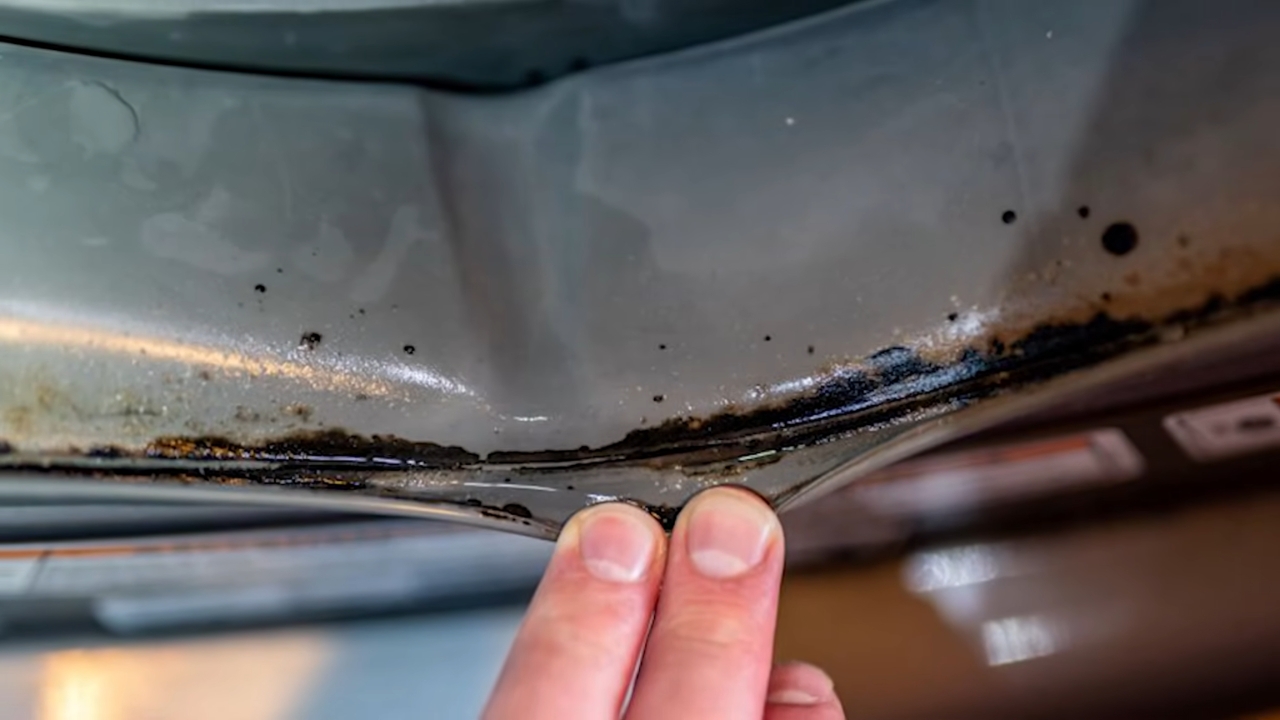
I pulled a set of white sheets out of our LG one Saturday and found them sprinkled with tiny black specks, like someone had shaken a pepper grinder over the bed.
My first thought was a leaking pen. My second, less pleasant thought was that something had been growing where I could not see it.
It was the second one. Black flakes in washing machine loads are almost always a sign of buildup on hidden surfaces, and they are fixable.
Here is what they are, where they come from, how I got rid of ours, and when I would stop scrubbing and call someone.
What Black Flakes Usually Are
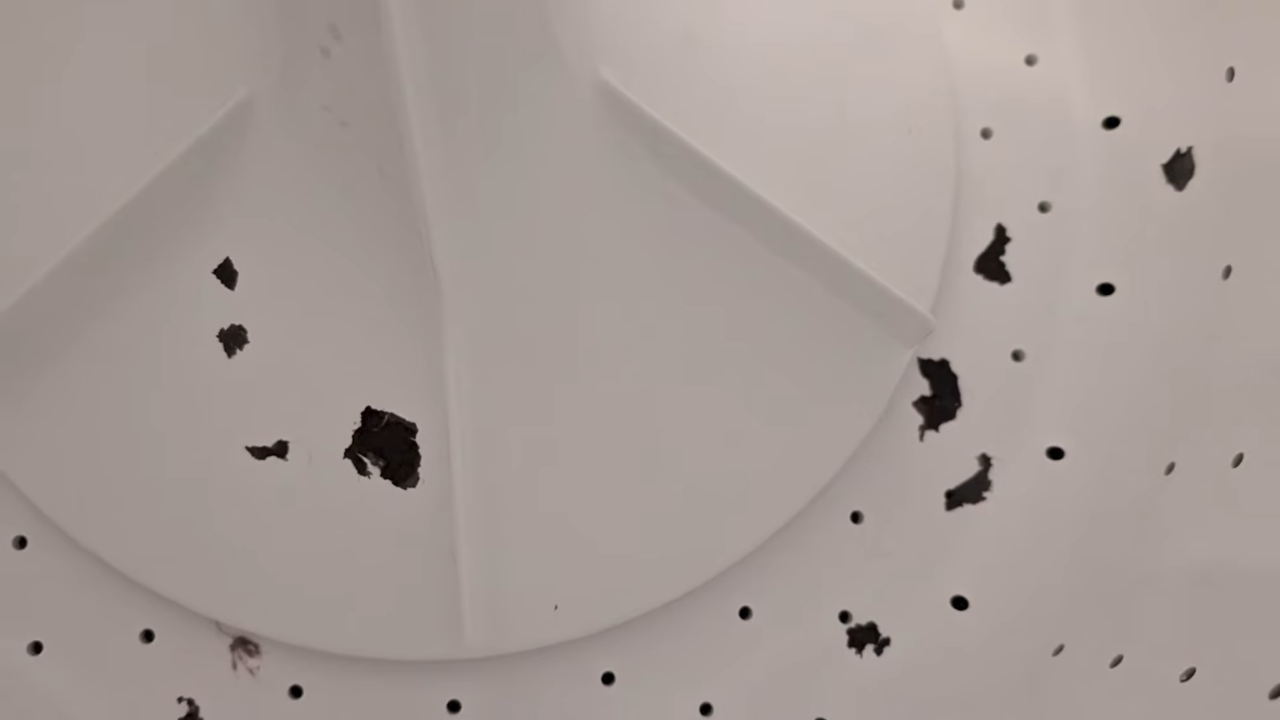
The flakes look alarming, but the explanation is fairly ordinary. They are pieces of a dark, greasy film that builds up in parts of the washer you never see, then breaks loose during a cycle and lands on your clean laundry.
Black flakes in a washing machine are usually a mix of mold and residue from detergent or fabric softener that collects on the hidden outer side of the drum, under the door gasket or inside the dispenser, then flakes off in the wash.
Samsung explains a version of this on its page about black particles on clothes from top loaders. Mostly cold washes, or weak hot water pressure, can leave dirt and undissolved detergent stuck to the inner bowl walls until the particles break free.
In my experience, black flakes in washing machine drums are the late stage of a problem that started months earlier.
Where The Flakes Hide
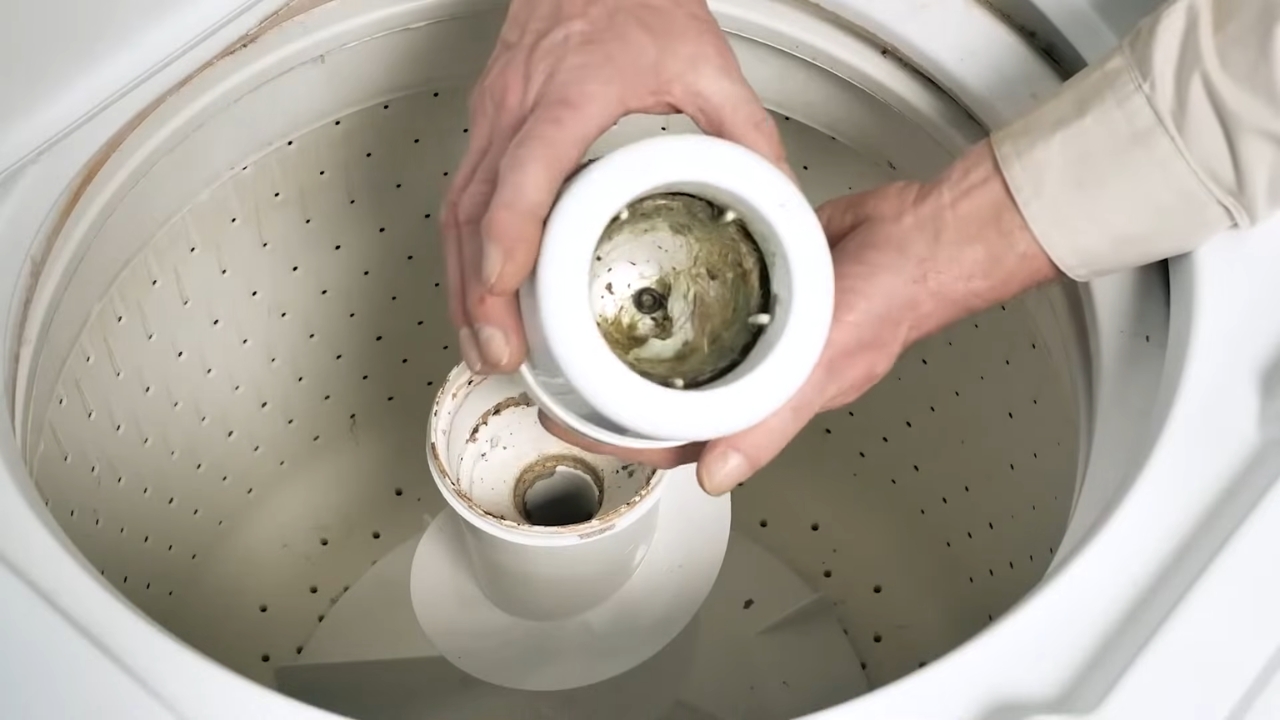
The frustrating part is that the drum you look into usually looks fine. The buildup lives on the other side of it, or in the folds and channels around it.
- The outer side of the drum and the tub around it, which you cannot see without taking the machine apart
- The fold at the bottom of a front loader door gasket
- The detergent and softener channels behind the drawer
Researchers studying washing machine hygiene focus on the same spots. A 2021 study in the journal Microorganisms sampled the detergent drawer and the door seal as the two key hygiene sites in household washers, and identified a wide range of bacteria at both.
My mother-in-law’s top loader taught me about the hidden side. Her clothes came out speckled for weeks before we realized the tub wall behind the basket was coated in gray-black sludge.
Mold, Residue Or Something Else
Not every dark speck means the same thing, and a quick look tells you a lot. Rub a flake between your fingers, with a paper towel if you are squeamish like me, and compare it with this rough guide.
| What you see | Likely cause | What I would do |
| Soft black flecks that smear | Mold mixed with residue | Repeated hot cleaning cycles |
| Gray or brown waxy flakes | Detergent or softener buildup | Hot cycles and less product |
| Hard, rubbery pieces | Worn gasket or hose | Call a technician |
| Ink or dye smudges | A pen or crayon in a pocket | Check the drum and filter |
The table is my own sorting system, not a manufacturer chart, but it has saved me from panicking more than once. Most black flakes in washing machine loads land in the first two rows.
How I Got Rid Of Black Flakes With Hot Cycles
One cleaning cycle rarely clears built-up residue, because the outer layer loosens first and the rest takes another round or two. LG’s guide to cleaning the tub recommends Tub Clean once a week for 3 weeks when a musty smell is already present, and I followed the same rhythm for our flakes.
- Wipe the gasket and pull out anything caught in the fold.
- Remove and rinse the detergent drawer.
- Run the hottest cleaning cycle your washer offers, with an approved cleaner.
- Wipe out any loosened flakes and leave the door open.
- Repeat the next week, and the week after.
Samsung’s washer cleaning guide also suggests running another Self Clean straight away if residue appears during the cycle. Getting rid of black flakes in washing machine drums is a patience job, not a one-cycle job.
When Bleach Belongs In The Fix
If the black flakes in washing machine loads are clearly moldy, soft, dark and smelly, a regular cleaner may not be enough on its own. Chlorine bleach can help, but only in the amount and compartment your manual specifies, in an empty machine, followed by an extra rinse.
Did you know? Samsung’s top load page suggests a long hot soak with white vinegar for black particles, but Bosch warns against vinegar in its washers because it may degrade rubber parts over time. Brands genuinely disagree, which is why the manual for your machine matters more than any general advice, mine included.
Whatever you choose, never combine bleach with vinegar or any other cleaner. When I dealt with black flakes in washing machine loads, I used one product per cycle and never mixed.
How To Keep The Flakes From Coming Back

Once the drum is clear, the goal is to stop the film from rebuilding. Consumer Reports, in its advice on minimizing mold in your washing machine, found that 16 percent of front load owners reported mold, mildew or odor problems, and its fixes match mine.
- Run a warm or hot load now and then instead of washing everything cold.
- Measure HE detergent instead of pouring freehand.
- Cut fabric softener back, or skip it on towels.
- Leave the door and drawer open after the last load.
- Wipe the gasket fold once a week.
Then clean your machine on a regular monthly schedule, and black flakes in washing machine loads become a story you tell rather than a problem you have. Our LG has stayed flake-free for over a year with exactly those habits.
When It Is Worth Calling A Technician
Most flakes are a cleaning problem. A few are a repair problem, and no amount of hot cycles will fix those. I stop cleaning and call a professional when any of these show up.
- Flakes keep appearing after three weekly cleaning cycles and a full gasket and drawer clean.
- The pieces are hard, rubbery or plastic, which can point to a worn gasket, hose or other part.
- Flakes come with leaks, grinding noises or water standing in the drum.
- You see mold you cannot reach, behind panels or deep under the gasket.
LG and Samsung both tell owners to request a repair when odor or mold problems persist after cleaning. In my opinion, three honest rounds is the limit. If black flakes in washing machine loads survive that, the problem is no longer on the surface.
What Happened To Our White Sheets
View this post on Instagram
Three Saturdays, three hot Tub Clean cycles, one very thorough gasket wipe and a rinsed drawer later, the flakes were gone. The sheets went through a second wash and came out white again, and so did my mood.
Black flakes in washing machine loads beat me for exactly three weekends.
The real fix was what came after. I warm up one load a week, measure softener, and leave the door open overnight.
If you are seeing black flakes in washing machine loads right now, start with three weekly hot cycles, then follow the routine in my guide to cleaning a front load washer so the pepper grinder never comes back.