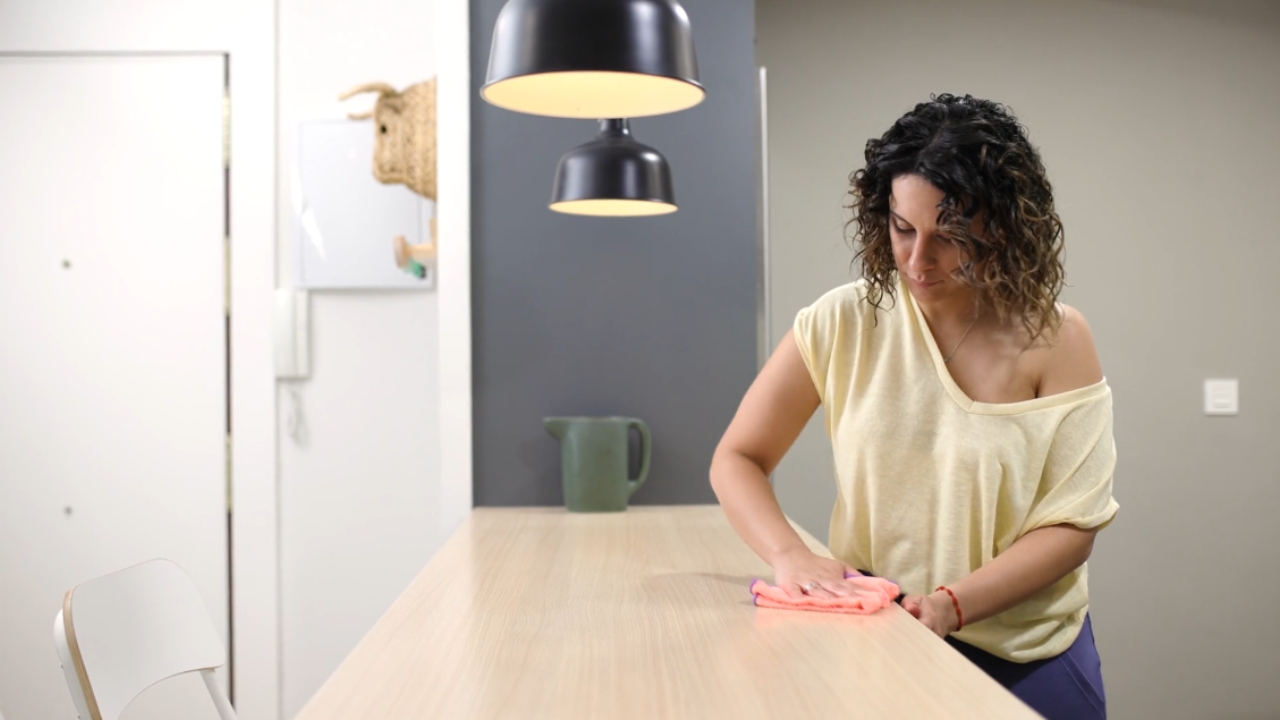

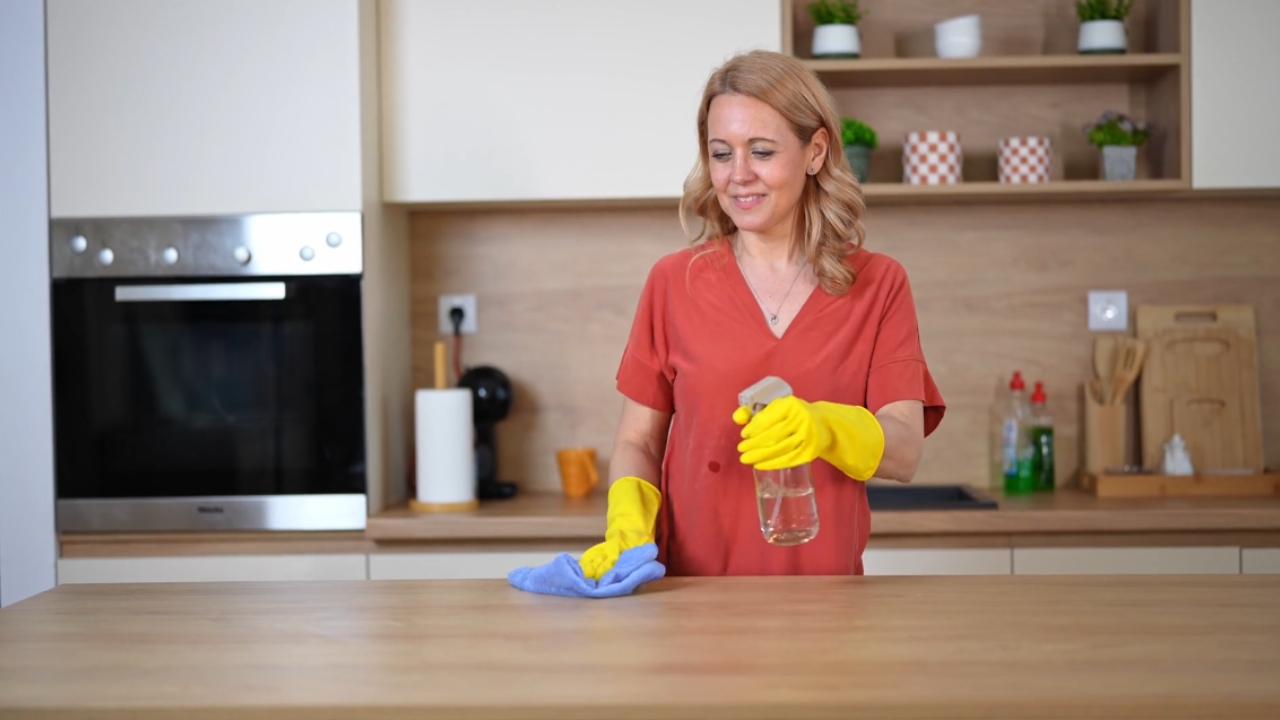
When life feels messy in ways I can’t fix immediately, I clean something. Not the whole house. It’s usually the first annoying thing I notice, like the kitchen counter, a drawer, or the bathroom sink.
When my family sees me organizing the pantry, they know something is bothering me.
I used to think this was simply one of my strange habits. It turns out there are reasonable explanations for why cleaning can feel satisfying when everything else feels uncertain. A clean sink doesn’t solve your problems. Even so, it gives you something tangible you can actually get done.
Cleaning has a predictable outcome – so it gives you control
Uncertainty is uncomfortable partly because so much of it gives us nothing useful to do. You can worry about a difficult conversation, wait for important news, or wonder how something at work will turn out, but there may be no immediate action that changes the outcome.
Cleaning is different. I’ve read a study that points out that when life feels chaotic, focusing on what you can actually manage helps ground you. Wiping a counter or clearing a desk is a very small version of that idea – there is a problem in front of you, you know what to do, and your actions change it.
Even lemon scent can influence our urge to clean. Researchers found that exposure to a citrus cleaner odor affected how people responded to household tasks.
I can’t organize every problem in my life into labeled baskets. I can, however, deal with the drawer containing three tape measures, dead batteries, and seventeen mystery keys.
Repetitive tasks give your mind a chance to reset
When I’m scrubbing, folding, sweeping, or putting things away, my hands stay busy, and my mind has just enough to focus on without having to make any complicated decisions.
A 2015 study found that when people felt anxious, their hand movements naturally became more repetitive and predictable. Later research suggested that doing familiar, repetitive actions may help anxiety ease a little after stress. And even though the effect isn’t very strong, it still helps.
View this post on Instagram
That doesn’t mean folding towels is therapy. It does help explain why familiar physical routines may feel calming.
I notice it most when I’m wired, not tired. Give me a rag and a dirty counter, and my brain finally gets a break. The counter is gross; I wipe it down, and it’s done. Simple as that.
I get a similar sense of calm when I wash our old china by hand. The irony is that Josephine Cochrane’s dishwasher story began with her frustration over damaged dishes.
You can see the result straight away
It feels so good to finish something for once. Most adult problems don’t let you do that. Parenting definitely doesn’t. Neither do money matters, family schedules, or that random drawer of adulting tasks you keep putting off.
Cleaning offers unusually clear evidence of progress. The laundry basket gets emptier. The floor stops crunching. You can see the table again.
Can you imagine that actual cleaning, and even vividly imagining cleaning, can reduce some psychological or physiological effects of stressful situations? And there were even 3000 participants in this study who verified this.
I rarely finish cleaning the kitchen and think my life has been repaired. I do sometimes finish one job and feel more capable of dealing with the next one.
A completed task gives the day a small full stop.
When I need a reset, I deliberately start small
I have learned not to respond to stress by announcing that I am going to deep-clean the entire house. That is how a coping mechanism becomes another problem.
The important part is having an obvious finish line. I want the satisfaction of completion, not another project hanging over me. That is also how I finally dealt with our chair full of clothes: I gave worn-once items a place to go instead of clearing the same pile every evening. I’ve learned not to start emptying cupboards late at night. Once every plate is on the counter at 10:30 p.m., I’m no longer winding down. I’ve simply created another job for the morning. I keep our LG washer on a monthly schedule for the same reason. My LG front-load washer Tub Clean routine keeps one more chore off the emergency list. A Swedish population study found that when household chores feel burdensome, people are more likely to have poor health. That makes sense to me. Wiping down the kitchen for ten minutes because I need to clear my head is one thing. Feeling responsible for keeping an entire household running every day is another. I enjoy cleaning more than most people I know, and even I don’t want to be responsible for noticing every empty soap bottle and abandoned sock in a four-person house. If cleaning gives you control, everybody else should not achieve the same effect by quietly giving you all the work. There is an important distinction here because people casually use “OCD” to describe anyone who likes order. I have joked about my own organizing habits too, but liking things neat or cleaning when you are nervous is not the same as obsessive-compulsive disorder. The National Institute of Mental Health describes OCD as involving uncontrollable recurring thoughts, repetitive behaviors, or both that can cause significant distress or interfere with everyday life. Obsessive compulsive disorder is often minimized or misunderstood in public conversation. OCD is not about liking things clean. It is a chronic mental health condition involving intrusive thoughts and compulsive behaviors that can significantly interfere with daily life. Black Americans are about 20 percent more likely to experience serious psychological distress, yet stigma and lack of awareness can delay proper assessment for conditions like OCD. Increasing mental health literacy strengthens communities and helps people recognize when symptoms may require specialized treatment. When people understand what OCD really is, they are more likely to seek help and receive evidence based care. Learn more at https://t.co/TkoLizQKFp 💙 — International OCD Foundation (@IOCDF) February 22, 2026 Excessive cleaning and arranging can be compulsions. For me, stress-cleaning is useful when I choose to do it, can stop when I want, and feel satisfied afterward. If cleaning becomes something you can’t stop, consumes large amounts of time, or is driven by distressing fears, that deserves proper professional attention rather than another storage system. I don’t look at it as a good or bad habit anymore. Sometimes wiping down a counter or sweeping the floor is just a quick reset button. It gives your hands something real to do, makes the room less stressful to look at, and lets you finish at least one small thing you can actually see. That can feel surprisingly good when everything else remains unresolved. The important part, for me, is knowing when to stop. I want the clean counter because it gives me a little room to think. I don’t need the entire house to become perfect before I am allowed to feel better. Even Marie Kondo eventually accepted a less tidy house when keeping everything in order began to take too much time away from family life. Life can remain complicated. The sink, at least, can be clean, and I will feel like I contributed to that.
Housework can just as easily become part of the stress
Cleaning helps me when I choose to do it. It feels very different when the housework is endless, and I’m the one expected to notice every empty soap bottle, pile of laundry, and abandoned sock.Stress-cleaning is not the same thing as OCD
I still clean when I am worried